
15.10.2026


The new complex will combine the production of sports equipment and infrastructure for karting and pilot training. Beginners and professional athletes, including those with disabilities, will be able to practice here.
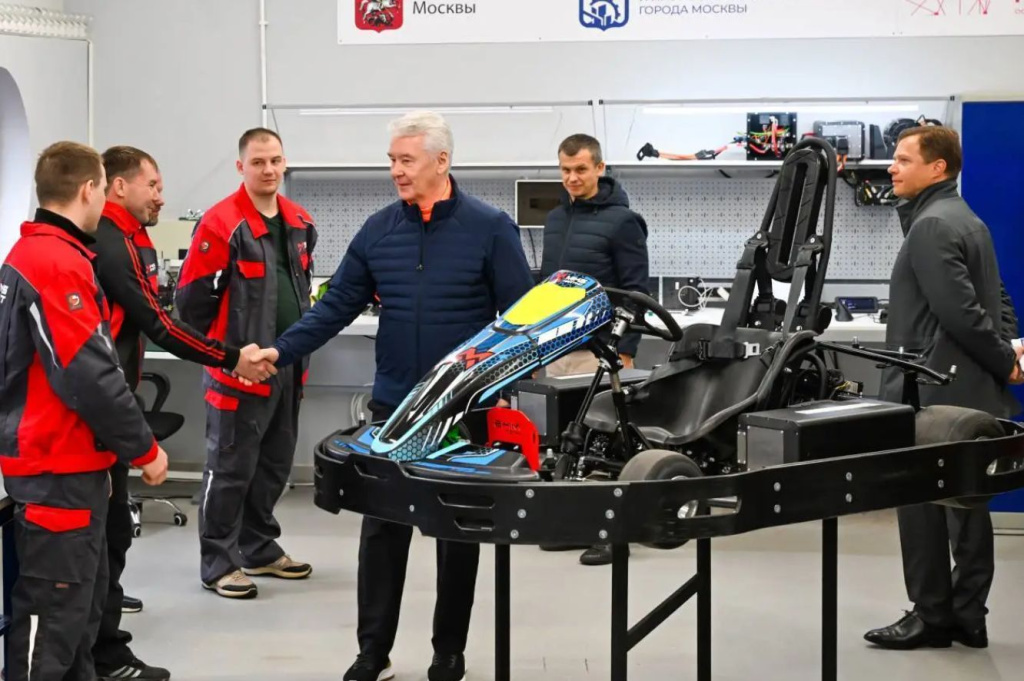
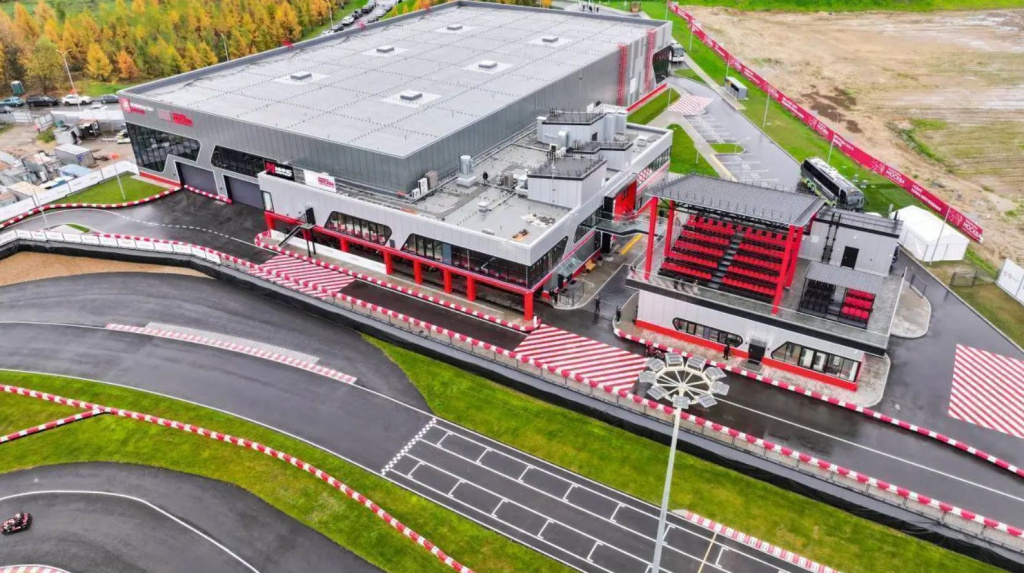
Moscow Mayor Sergei Sobyanin has opened a center for the design and production of Russian electric and internal combustion engines in the Rudnevo Industrial Park, one of the sites of the Technopolis Moscow Special Economic Zone (SEZ). It includes its own production building, Moscow's largest cart track with indoor and all-season outdoor tracks, as well as a karting academy.
"The industrial center in Rudnev continues to develop actively. New large buildings are being built here. 39 high-tech enterprises are already operating. About five large enterprises will be opened by the end of the year. Today we are opening one of the largest karting centers in the country. And this is not just a sports ground, it is also a testing and production site for domestic go-karts. I hope that the volume of production, which today is in the dozens, will be in the hundreds, and the level of localization will increase significantly," Sergei Sobyanin said at the opening of the center.
For the construction of a go-karting center on the territory of the Rudnevo Industrial Park, the city has allocated a 3.5-hectare site. The cartodrome has become one of the largest in Russia: The length of the trails exceeds 1.2 kilometers, and the total area of the facilities is 5,700 square meters.
Today, almost six thousand highly qualified specialists work at the Rudnevo site. About 450,000 Muscovites live near the karting center, in the districts of Nekrasovka, Kosino-Ukhtomsky and Vykhino-Zhulebino, which guarantees its high demand. It is expected that the center will be able to receive more than two thousand visitors daily.
Production of Russian maps
The karting center is based on a specialized production building with an area of 450 square meters. It organizes a full cycle of creating maps — from the design and development of new models to serial assembly and testing.
"Our company as a manufacturer began its history in 2021. We spent two years coming up with, designing, and testing the first models. And at the moment we are already supplying maps to 27 cartodromes in Russia, including St. Petersburg, Kaliningrad, Nizhny Novgorod. Now we are sending the cards to Vladivostok, to Kazan. That is, the geography is really extensive, and Novorossiysk, in general, has many, many cities. And 27 cartodromes are about 10 percent of all active cartodromes that currently exist in Russia," said Alexey Ermilin, General Director of Mix Maps.
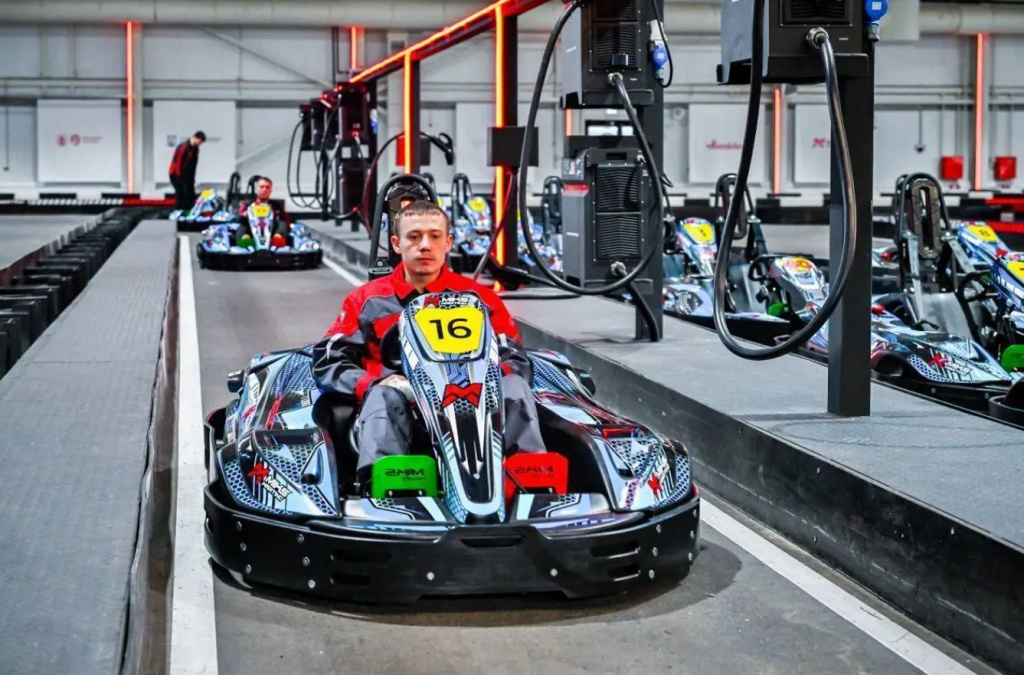
The product line includes electric cards and cars with internal combustion engines for amateur skating and professional sports, as well as adaptive models for pilots with disabilities. In addition, they will organize the refinement of production maps for specific races and operating conditions. There are also plans to launch the production of electronic components.
Today, more than 20 cartodromes throughout Russia use maps and spare parts produced by Mix Maps. After the opening of the new center in the Rudnevo Industrial Park, it is planned to increase the production of equipment by almost 1.8 times to more than 350 vehicles per year.
"The new production site, I am sure, will allow us over the next two years to increase, firstly, the number of products from about 300 this year to 400-450 in the next year or two. Plus, we're going to launch new models here this year. To test and mass—produce at least two more models," said Alexey Ermilin.
In the future, the level of localization of production may reach 95 percent, including through the use of batteries from the gigafactory of Renera LLC. It was opened in October 2026 on the territory of the Moscow cluster of electric batteries of the Technopolis Moscow SEZ.
"The manufacturer has developed innovative software for remote control of maps. It allows you to stop the car, if necessary, to receive timekeeping data and information about the state of the equipment. This increases the safety of training and racing, and helps to further improve the models," Sergei Sobyanin said on his channel in the Maks messenger.
The placement of an open track next to the production site next to the race tracks will help to quickly test new samples of maps and shorten the path from design to practical application.
Indoor and all-season outdoor trails
The 400-meter-long indoor race track allows for both gasoline-powered and electric-powered races. When designing it, a special design solution was used — a span of 50 meters wide was performed without columns. This will allow you to change the configuration of the racing track for different use cases — from sports training to amateur competitions and activities for children. There are two classrooms next to the track for theoretical training in wrestling and cart driving.
The 810-meter-long open highway has received Category C certification from the Russian Automobile Federation. This makes it possible to hold official competitions at various levels, from city starts to interregional championships. The open track can be used all year round, which distinguishes it from the tracks of other cartodromes in Moscow and the Moscow region.
The track was equipped with a timekeeping system, LED screens for displaying results in real time, traffic lights, photo-recording equipment and professional lighting. Thus, arrivals can be organized at almost any time of the day in compliance with all safety requirements.
Special attention was paid to the comfort of the residents of the surrounding neighborhoods. To minimize the noise impact, a protective screen with enhanced sound insulation was installed near the cartodrome.
VR arena and recreation space
The karting center is equipped with a unique multifunctional space - a VR arena. It can work in several scenarios:
— as a children's space with animators, where parents can leave their children while participating in training sessions and races;
— as a large classroom or lecture hall for conducting various activities for children in a playful way, including technical lessons on the construction of maps, as well as classes on the basics of traffic rules;
— as a car simulator room (sim racing zone) with six professional simulators, where children (up to eight people) will be able to learn driving skills using VR helmets.
For visitors, there is a cafe with panoramic views of the racing track, spacious locker rooms and lounge areas for pilots, as well as a game room for the youngest guests.
The new karting center will become a venue for popular competitions and events in the field of motorsport. Among them are the Kartsim digital racing festival, which combines go-karting and sim racing, with the participation of famous Russian racing drivers, bloggers and journalists, the Miks Marathon Series, a 12—hour summer endurance racing series, as well as the Miks Junior children's championship. Pilots of different ages participate in these competitions, from seven—year-olds to adult athletes, and online broadcasts collect hundreds of thousands of views.
Karting Academy
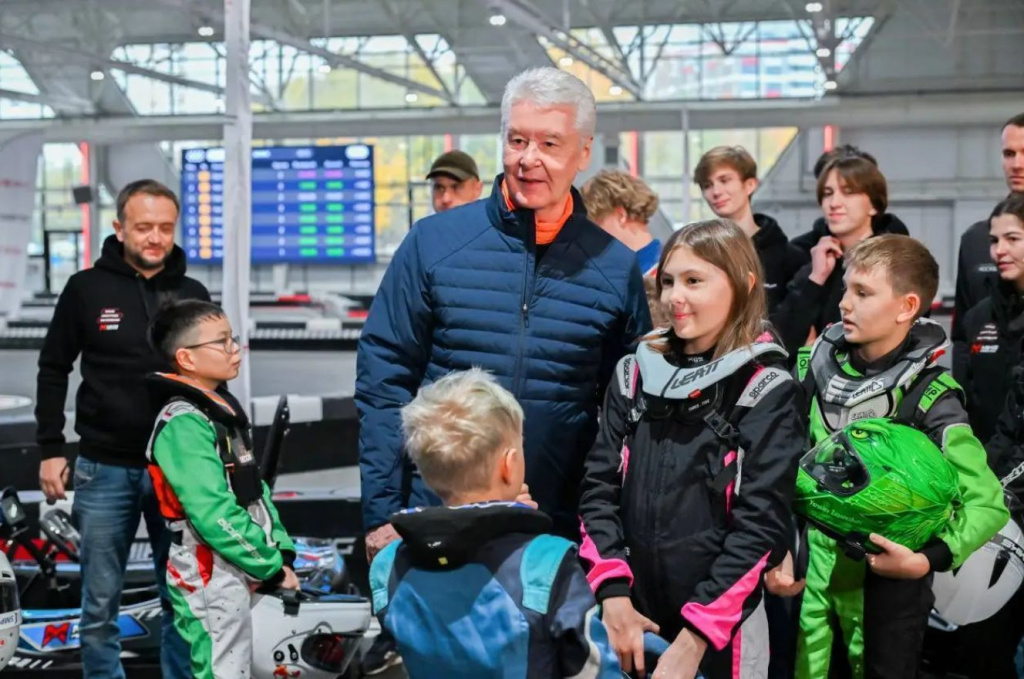
The Rudnev karting Center will become the main site of the Mix Kart Karting Academy, one of the largest Russian karting training centers operating in Moscow since 2014. Here, children will be able to master piloting, study the design of equipment and get acquainted with the engineering component of motorsport.
Thanks to the new site, the academy expects to significantly expand pilot training opportunities. The number of pupils will increase to 400 people per year.
Opening of the karting center in Rudnev
The training of young athletes is built as a full-fledged educational program. Training is conducted on maps prepared for this purpose, and a specialized gym is used to develop physical endurance, reaction and coordination.
The basic course lasts for seven to nine months and includes the theory of wrestling, practical training with three to four races per class and mandatory physical training. Homework helps you learn the rules of competition and form a sports discipline. For example, students get acquainted with the system of signal flags used by judges during races.
An important part of the program is technical training. The students study the device of the card and analyze the features of the functioning of the equipment. Our own production will allow us to take classes to a new level. Children will be able to visit it, get acquainted with the operation of equipment, design, assembly and improvement of sports equipment. In many ways, this continues the tradition of engineering and technical education, which used to develop in pioneer homes.
One of the key tasks of the new center is to make motorsport more accessible. Today, classes require significant expenses for equipment, training and participation in competitions. The production and concentration of all necessary infrastructure at Rudnev will reduce this barrier and form a consistent trajectory for the development of a pilot — from the first classes at the academy to participation in the affordable motorsport program and further transition to professional competitions. For talented children, this is an opportunity to get the necessary training, prove themselves, and eventually attract the interest of well-known teams willing to invest in the development of athletes.
Development of adaptive karting
Another goal of the academy is to make motorsport more accessible and attractive for people with disabilities. Rudnev will continue to develop the field of adaptive karting and the work of an inclusive section, including with the participation of veterans of a special military operation. The number of regular participants is planned to increase to 100 or more, and the total attendance during the year promises to exceed one thousand people. Pilots will be able to train on specially prepared manually operated maps and participate in competitions with other athletes.
The Mix Maps company has launched serial production of adaptive maps. More than 50 copies have already been delivered to Russian regions, including St. Petersburg, Tula and Novorossiysk. They are currently producing maps for Khabarovsk and Vladivostok. The placement of production directly at the karting center will allow us to improve the design of the equipment, taking into account the experience of the pilots and almost immediately test new solutions on the track.
The Karting Without Borders project proved its effectiveness: the inclusive section team took second place in the 12-hour Miks marathon. The next stage in the development of this area will be the expansion of the competition program. In 2027, it is planned to hold large adaptive karting competitions in Rudnev, in which athletes from different regions of Russia will be able to participate.
Press Service of Technopolis Moscow SEZ
+7 495 647 08 18 (ext. 1209) pr@technomoscow.ruFollow Technopolis Moscow SEZ on social media, stay updated with the main SEZ news on our Telegram channel, and receive all important updates directly to your inbox via our weekly newsletter.


