
17.09.2026


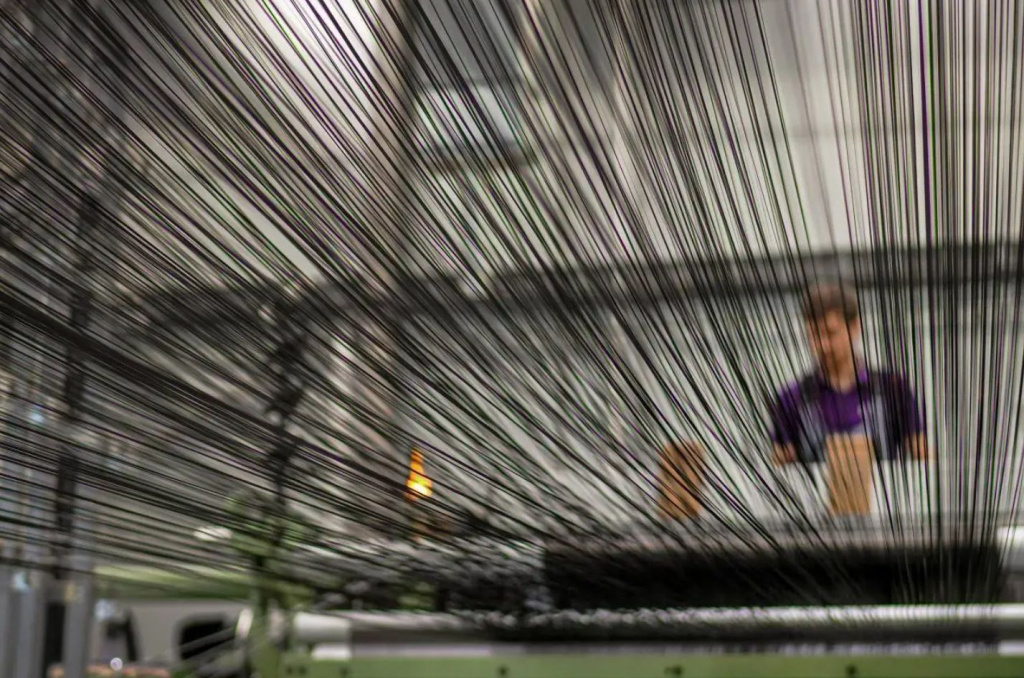
Innovative railings and drainage trays produced in the special economic zone (SEZ) “Technopolis Moscow” were used in the repair of a bridge on the Kazan–Orenburg–Akbulak highway (R-239) in Tatarstan. The use of composite products will help reduce the costs of maintaining the structure over its entire service life. This was announced by Maxim Liksutov, Deputy Mayor of Moscow for Transport and Industry.
“On the instructions of Moscow Mayor Sergei Sobyanin, residents of the capital’s SEZ are supplying innovative products to the regions of Russia.” High‑tech composite products manufactured in Moscow are in demand for various infrastructure projects, including those related to road repair and construction. The company supplied 280 linear metres of fiberglass drainage trays and composite railings for the reconstruction of a bridge on a highway in the Republic of Tatarstan. By the end of the first half of 2026, the total volume of products manufactured by the enterprise exceeded 11.8 billion rubles,” noted Maxim Liksutov.
The repair of the hydraulic structure, built in 1979, began in August 2025. Specialists repaired the supports, the superstructure, and the bridge deck. Composite railings and drainage trays, manufactured by the Nanotechnological Center of Composites, were installed along the entire length of the bridge. Unlike metal structures, fiberglass products have a number of important advantages. They are lighter in weight, resistant to corrosion, do not require maintenance costs during operation, are durable, and allow for easy replacement of individual elements.
The resident’s products were also used in a number of major infrastructure projects in Russian regions. Among them are the flood protection complex in St. Petersburg, the railway bridge of the Trans‑Siberian Railway in the Irkutsk Region, the overpass over the Tula–Minsk railway on the R‑122 “Golden Ring” highway, the bridge across the Kamardan River in the Astrakhan Region, as well as sections of the M4 “Don” highway.
Products from the residents of the capital’s special economic zone are regularly supplied to Russian regions — from the Kaliningrad Region to the Far East. Inspection equipment manufactured in the capital is used at airports, railways, and energy facilities across the country. Portable medical devices for emergency care are supplied to ambulance services and hospitals in more than 50 regions. Composite materials and structures are used in the construction and reconstruction of bridges, overpasses, and hydraulic structures in dozens of regions. And digital educational equipment developed by a resident of the special economic zone helps schoolchildren and preschoolers learn natural sciences in 73 regions.
The special economic zone “Technopolis Moscow” is celebrating its 20th anniversary in 2026. Over the past two decades, the project has transformed from a launchpad for innovative projects into a key hub for domestic industry and a magnet for companies that define Russia’s technological sovereignty. Today, production of more than 240 high‑tech enterprises representing strategic areas such as microelectronics, instrument engineering, biomedicine, IT, and robotics is located across 10 sites of the “Technopolis Moscow” SEZ, with a total area of 430 hectares.
Moscow is actively developing industrial infrastructure for high‑tech enterprises. Thanks to urban solutions, companies are increasing their output and launching innovative production facilities. This contributes to the implementation of the national project “Efficient and Competitive Economy”.
Press Service of Technopolis Moscow SEZ
+7 495 647 08 18 (ext. 1209) pr@technomoscow.ruFollow Technopolis Moscow SEZ on social media, stay updated with the main SEZ news on our Telegram channel, and receive all important updates directly to your inbox via our weekly newsletter.


