
11.09.2026


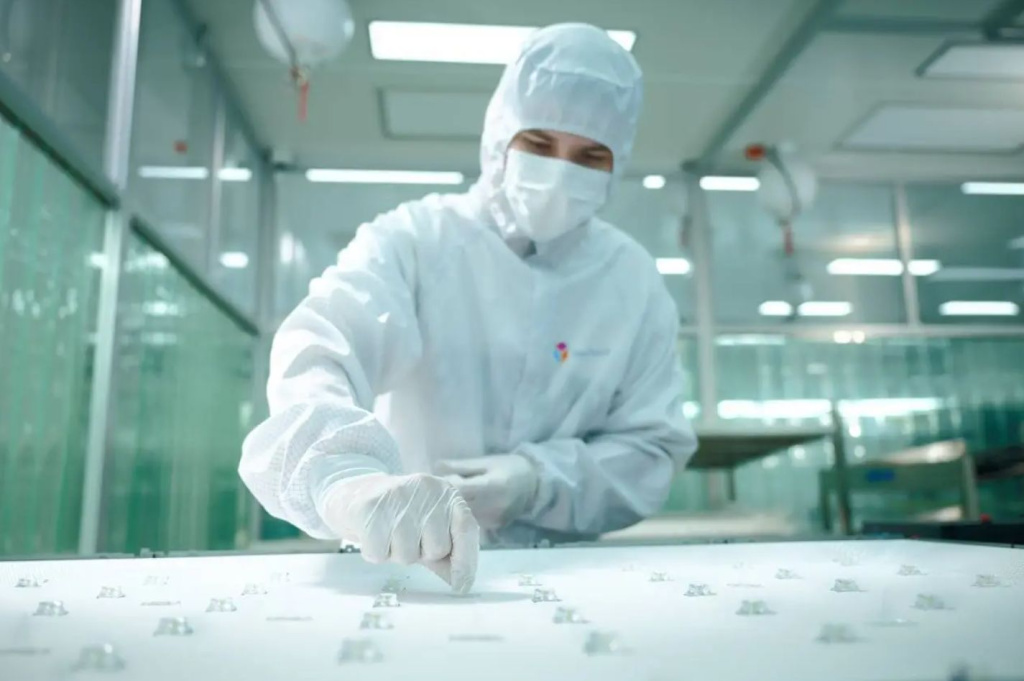
A resident of the special economic zone (SEZ) “Technopolis Moscow” has begun producing interactive monoblocks equipped with a domestic liquid crystal module. The devices combine a computing unit and a touch screen, and also support contactless control based on artificial intelligence. This was announced by Maxim Liksutov, Deputy Mayor of Moscow for Transport and Industry.
“On the instructions of Moscow Mayor Sergei Sobyanin, the city is systematically supporting high‑tech enterprises to build up industrial potential and bring innovative solutions to the market.” A resident of the capital’s special economic zone has begun producing next‑generation interactive monoblocks with liquid‑crystal modules manufactured in Russia. In a single housing, such a device combines a powerful computing unit and a touch screen, which simplifies the digitalization of production processes at enterprises. In addition, the monoblock can be adapted for contactless control using artificial intelligence algorithms. This expands the scenarios for its use and makes working with the device more convenient for employees,” said Maxim Liksutov.
The development by Nex‑T (brand NexTouch) is intended for offices, educational and medical institutions, industrial enterprises, government agencies, and critical information infrastructure facilities. Using the monoblock, employees can visualize production data, monitor and analyze information, work with digital and 3D models, and train personnel right at the workplace. The device supports optional contactless scenarios, which make interaction with the equipment even more intuitive.
NexTouch CEO Vladimir Krikushenko noted that the launch of serial production of liquid crystal modules within the country is changing the market structure. Local production guarantees stable supplies of this critical component for a wide range of industries. Previously, such modules were entirely imported from abroad, and domestic manufacturers were dependent on external supplies and price fluctuations. Domestic production reduces costs and delivery times, lowers import dependence, and makes it possible to more actively use Russian developments.
Earlier, Moscow Mayor Sergei Sobyanin spoke about the unique developments of Moscow’s enterprises. Among them are a quantum sensor and a mini‑shuttle for space research, a small satellite for remote sensing of the Earth, a plasma propulsion system for satellites, a neural network accelerator for robots and smart city systems, high‑speed equipment for 5G networks, and many others.
The Technopolis Moscow special economic zone is celebrating its 20th anniversary in 2026. Over the past two decades, the project has transformed from a launchpad for innovative projects into a key hub for domestic industry and a magnet for companies that define Russia’s technological sovereignty. Today, production of more than 240 high‑tech enterprises representing strategic areas such as microelectronics, instrument engineering, biomedicine, IT, and robotics is localized across 10 sites of the Technopolis Moscow SEZ, with a total area of 430 hectares.
Moscow is actively developing its investment climate and industrial potential. Thanks to urban solutions, labor productivity and production efficiency are increasing. The activities carried out as part of this contribute to the implementation of the national project “Efficient and Competitive Economy.”
Press Service of Technopolis Moscow SEZ
+7 495 647 08 18 (ext. 1209) pr@technomoscow.ruFollow Technopolis Moscow SEZ on social media, stay updated with the main SEZ news on our Telegram channel, and receive all important updates directly to your inbox via our weekly newsletter.


