
05.05.2026


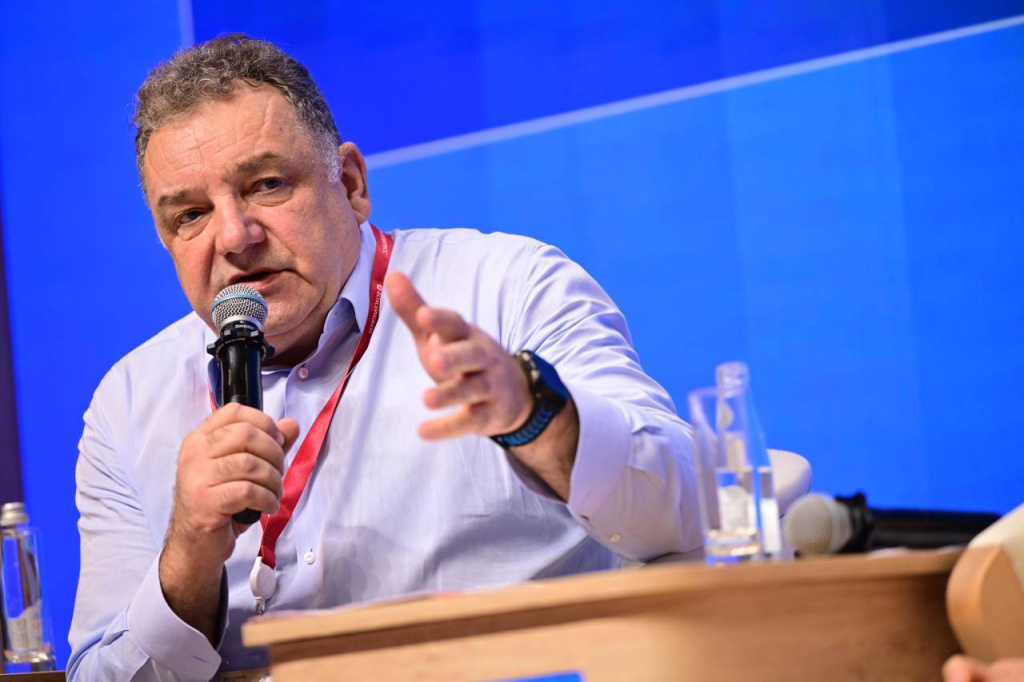
Technopolis Moscow Special Economic Zone (SEZ) is one of the most dynamically developing SEZs in Russia: over the past ten years, over 30,000 jobs have been created there, and the number of residents has grown from 38 to 128. Today, 240 companies operate in the capital's SEZ, creating import-substituting and strategically important products. The Director General of Technopolis Moscow SEZ told Kommersant about the stages of development that the Moscow economic zone had to go through in order to become the main driver of achieving the country's technological sovereignty, what the portrait of its resident looks like today, what unique tax preferences and conditions are provided to them, and why the industrial sites of this SEZ are becoming new points of attraction on the map of the capital Gennady Degtev.
— How has the role of the Technopolis Moscow SEZ in the industrial policy of the capital changed in recent years?
— The Technopolis Moscow Special Economic Zone today is not just a business support tool, but the heart of the innovative metropolitan industry and the main driver of achieving the technological sovereignty of the country. Industrial development issues are always at the center of attention of Russian President Vladimir Putin. Despite the ongoing external sanctions pressure and political turbulence, the enterprises of the special economic zone remain stable and demonstrate steady growth. The figures convincingly show the dynamics of the project's development: in ten years, the number of residents has grown from 38 to 128, and over 30,000 jobs have been created. Today, 240 companies are working in the SEZ of Moscow, creating import-substituting and strategically important products. These are lithographic equipment, photonic integrated circuits, neural network accelerators, robotics, as well as modern medicines, medical products and much more. According to the Strategy for the Development of the capital's industry until 2030, approved by Moscow Mayor Sergei Sobyanin, Technopolis Moscow SEZ has been identified as a key link in the industrial development of the city — a testing ground for the creation of a new industry: high-tech, knowledge-intensive and environmentally friendly.
— What key stages of SEZ development do you consider to be crucial?
— The history of the capital's SEZ began in 2006. Moscow was one of the first in the country to receive the right to provide preferences to high-tech businesses. Zelenograd, the historical center of the Soviet electronic industry, became the launch site of the project. A key turn in the history of the project's development was in 2016, when the SEZ was transferred from federal subordination to Moscow. Its renaissance begins from this period. Decision-making has accelerated: the city has become more efficient at managing processes and developing territories. The approach to selecting industrial investors applying for resident status has changed. The focus has shifted from simply filling vacant areas of ready-made infrastructure to finding industrial leaders willing to build factories from scratch. But most importantly, the goals of the SEZ were synchronized with Moscow's industrial policy and the demands of the city.
The next stage in the development of the special economic zone was the creation of inter-industry clusters on the initiative of Moscow Mayor Sergei Sobyanin: pharmaceuticals, microelectronics, photonics, electric vehicles and others. Today, they include more than 70 enterprises of the Technopolis Moscow SEZ. This approach has allowed us to build full-fledged production chains and accelerate joint development. Offset contracts, which the city has been concluding since 2017, have become another important tool for the development of industry. Investors received a guaranteed sales market, and Moscow received new production facilities and jobs. Currently, 20 of the capital's 36 "offsets" are implemented by SEZ residents. Thanks to this, the city promptly receives medicines for the treatment of oncological, cardiac, endocrine and autoimmune diseases, medical products, elevators, utility equipment for housing and communal services and much more.
— What does the portrait of a resident of your SEZ look like today: are these startups or mature industrial companies?
— A resident of the Technopolis Moscow SEZ is primarily an innovator. Not a "copycat" following world leaders, but a creator of world-class technologies. In SEZs of the technical and innovation type, the "entrance ticket" is given to those who not only produce, but develop innovative technologies of the future. Each of the ten sites has its own unique specialization. The leaders of the microelectronics industry and pharmaceutical companies are concentrated at four sites. The Khrunichev site retains its historical specialization in the field of aerospace technologies and developments, and the KMZ sites have a cluster of vertical transport. The first stage of the plant, which has no analogues in Russia, which produces large-sized residential modules, is already operating at the Tolstopaltsevo site. Becoming a resident of the Moscow SEZ today means integrating into one of the strategic niches that are currently defining the high—tech appearance of the capital's industry.
— How competitive are the conditions for residents compared to other special economic zones, both Russian and foreign?
— The SEZ of Moscow provides, without exaggeration, unique tax preferences and conditions. Enterprises that have received resident status enjoy tax preferences: for ten years, enterprises are exempt from paying taxes on property, land and transport, and the income tax rate is 2% instead of 25%. Residents are also exempt from paying customs duties and VAT when importing goods and equipment under the ETA procedure. The company uses the saved funds to increase production, purchase modern equipment, develop new high-tech products, and R&D.
— If we talk about microelectronics, what specific competencies and productions have already been localized?
— For the SEZ of Moscow, where more than 40 microelectronics enterprises are concentrated, this industry is of strategic importance. Our residents do not just produce components, but create the foundation for the country's digital independence. I will give examples of several recent breakthrough developments. Last year, the first production of photonic integrated circuits in Russia was launched. This technology allows you to increase the data transfer rate by 100 times. It should be noted that this is critically important for the development of unmanned vehicles, data centers and next-generation communication networks. Our resident Zelenograd Nanotechnology Center has developed the first domestic photolithograph (350 nm) for the production of microcircuits. Unlike its foreign counterparts, this installation uses a solid-state laser instead of a mercury lamp. Another resident's portfolio includes more than 900 different types of products, including integrated circuits for automotive electronics, the Internet of Things, as well as chips for bank cards, passports and transport documents. Our other resident is working on special chemical materials: high-purity reagents, lithographic materials, polishing suspensions, which are necessary for the creation of microelectronic and photonic products. Last year, he patented a development related to analytical chemistry. In particular, a method for accurately measuring the amount of tetramethylammonium hydroxide in a concentrated aqueous solution. It will be useful in scientific research, as well as for creating concentrated solutions that are used in the manufacture of microchips and electronic equipment. Thanks to this synergy, Technopolis Moscow SEZ forms a full-fledged technological chain, independent of external supplies.
— How stable has the pharmaceutical cluster turned out to be: are we talking about developing our own developments?
— Yes, of course. Moscow is not just expanding production, but creating a base for the production of the most complex medicines that were previously available only from abroad. And we are not doing this in a single format. The pharmaceutical cluster was established in October 2022 on the initiative of the Moscow government on the basis of the Alabushevo site, and in the future it will become the largest in Russia. Currently, it includes 14 companies, 10 of which already produce a wide range of medicines from cardiac and anti-inflammatory to oncological and autoimmune diseases. Last year, the production of complex genetically engineered drugs began. The uniqueness lies in the fact that they are created on the basis of Russian substances. This is critically important for patients with rare and socially significant diseases. And this year, another resident of ours started producing a drug based on its own substance for the treatment of 13 types of oncological diseases at once, including for patients with melanoma, lung cancer and other dangerous diseases. The drug helps the human immune system to recognize and destroy tumor cells. Biologics of this class are among the most technologically complex.
— Are there any examples in the segment of medical devices where the developments of your residents are already competing with their international counterparts?
— Over ten resident companies in the Moscow SEZ are already developing and manufacturing equipment for emergency medical care, artificial lung ventilation devices, ultrasound diagnostics, innovative prostheses and much more. Last year, the production of a patented device for cardiopulmonary resuscitation began. The robotic device replaces a doctor or lifeguard during an indirect heart massage and allows you to free your hands for other necessary manipulations. The device is capable of operating continuously for 92 minutes, which is several minutes longer than its foreign counterparts. Also last year, a device was created that allows you to determine the respiratory rate and carbon dioxide content in the patient's exhaled air. The device differs from imported analogues in its small size and convenient use. This completely eliminates the need for other methods of diagnosing carbon dioxide in the human body.
— Can we say that cooperation between residents is being formed within the SEZ, or do companies operate rather autonomously?
— The possibility of cooperation is another advantage of placing production on the sites of the Technopolis Moscow SEZ. Cooperative ties between enterprises within the company make it possible to implement joint projects that minimize logistical costs and increase the level of localization of products. For example, our resident, specializing in industrial radio communication systems, carries out orders for the assembly of complex electronic modules for several other SEZ enterprises at once. Another example of a high—tech bundle is the use of additive technologies. High-precision parts "printed" on an industrial 3D printer of one resident are successfully integrated into modern anesthesia and respiratory devices of another. Last year, residents specializing in the production of interactive equipment and artificial lung ventilation devices jointly developed a ventilator with a new generation of domestic LCD display. They managed to solve the difficult technical problem of synchronizing the operation of the head computer of the ventilator with a new touch screen. Therefore, we can say that a unified technology team has been created in the SEZ of Moscow.
— How do you assess the effect of the SEZ presence on the city as a whole — in numbers: investments, jobs, tax returns?
— The special Economic Zone does not just adapt to changes, but creates conditions in which Russian companies can grow despite external restrictions. Our priority remains unchanged: creating the best environment in the country for innovation and industrial growth. Each of our actions, from finding and accompanying an investor to ensuring the comfort and operation of engineering systems, is a contribution to strengthening the capital and Russian industry. If we talk about investments, the volume of extra—budgetary investments of residents exceeded 287 billion rubles, of which 51 billion rubles - for 2025. These are direct investments in Moscow's modern industry. In 2025, the city's budget received 38 billion rubles from enterprises in the form of tax deductions. These funds are a resource for the further development of the capital. Revenue from sales of residents' products in 2025 amounted to 273 billion rubles, which is 40% higher than in 2024. Residents also demonstrated their competitiveness in global markets, increasing exports to 9.3 billion rubles. Among the main export countries are China, Belarus, the United Arab Emirates, Kazakhstan, Kyrgyzstan, and Uzbekistan. Microelectronics, medical technology, and pharmaceutical companies supply their products.
— Is the development of the "city within a city" concept in the SEZ more about employee comfort or about creating a new urban environment?
— The development of the concept of a "city within a city", or a "15-minute city" in a SEZ, is the case when the interests of business and people coincide, eventually creating a completely new urban environment. Today it is not only a preferential territory for high-tech industries, but also an entire ecosystem with its own way of life. Industrial sites are becoming new points of attraction on the map of the capital, where it is comfortable for both employees of enterprises and our guests. In 2025, modern fitness centers were opened at the Alabushevo and Rudnevo sites for all sports enthusiasts. For the second year in a row, ice rinks were operating at the Pechatniki site and for the first time in the Rudnevo Industrial Park, which were visited by over 42 thousand people. In the summer of 2025, a new recreational space was opened on the roof of the Technoflagman business center stylobate, which is used as a recreation area for employees of the Rudnevo site and residents of nearby areas. Since 2023, a summer mini-football tournament among employees of enterprises has been held in the Technopolis Moscow SEZ. In 2025, 17 teams competed for the title of the best, and 80 football matches were held. In addition, communities for yoga, zumba, table tennis, chess, and English and Chinese language studies are actively developing at the Technopolis Moscow SEZ sites. Employees of our enterprises participate in all city motorcycle and cycling festivals, track and field relay races, and clean-up days.
— How do you see Technopolis Moscow SEZ in five to ten years?: Will it be an industrial cluster, a technological hub, or a new form of urban space?
— We don't need to speculate on that. In accordance with the Strategy for the Development of the capital's industry until 2030, Moscow's SEZ is being transformed into a global industrial metropolis with an environment where technological sovereignty will be supported by high efficiency. The demand for "speed" from the government and business pushes us to optimize internal processes, and working under sanctions requires flexibility and the search for new partners from friendly countries. In 2025, Technopolis Moscow SEZ opened a representative office in China to support our exporters and search for new suppliers. This work will be continued in other countries with which Russia is building strategic relations on mutually beneficial terms. We will have to change the minds of our industrial partners regarding the efficient allocation of resources and the introduction of two- and three-shift work schedules for enterprises. This will help increase productivity by minimizing equipment downtime. A separate area is the educational contour. Since 2022, the Technostage project has been implemented, allowing young people to acquire key skills and competencies at enterprises that are leaders in high-tech industries. In 2025, more than 1.7 thousand students completed internships, and more than 3.2 thousand students have participated in the project over the entire period. Over 30 agreements on the organization of educational, industrial and postgraduate practices have been concluded between the Technopolis Moscow SEZ and the leading Moscow educational institutions of higher and middle management. For example, among them is the Moscow State Technical University named after N. E. Bauman, Moscow Polytechnic University, MADI, MIPT, Plekhanov Russian University of Economics. The flagship center for practical training of Moscow college students operates at the Rudnevo site, and last year the center for "Professions of the Future" and the Center for Practical Training for Mechanical Engineering were opened at Pechatniki. Thousands of students will practice here every year. I am confident that the accumulated margin of safety and the well-coordinated work of our team will allow us to continue to ensure leadership positions.
Kira Vasilyeva, Kommersant newspaper
Press Service of Technopolis Moscow SEZ
+7 495 647 08 18 (ext. 1209) pr@technomoscow.ruFollow Technopolis Moscow SEZ on social media, stay updated with the main SEZ news on our Telegram channel, and receive all important updates directly to your inbox via our weekly newsletter.


