
12.04.2026


The capital's developments shape the trajectory of the space industry for a decade to come. New communication technologies and innovative materials will become the foundation for the spacecraft of the future.
Cosmonautics Day is celebrated on April 12. In his blog, Sergei Sobyanin congratulated Muscovites on this holiday and spoke about the capital's contribution to the development of the Russian space industry.
Yuri Gagarin's historic flight paved the way for humanity to the stars and has been inspiring new generations to conquer unknown frontiers for 65 years. Many streets and squares in Moscow are named after the heroes of space. Majestic monuments on Leninsky Prospekt, VDNKh and in many other places of the city are dedicated to them. There are always a lot of children and young people at the planetarium, the Cosmonautics Museum and the Cosmos pavilion at the country's main exhibition. The theme of space is embodied in the design of Moscow parks and playgrounds. And of course, it is very popular on the Internet.
"Moscow scientists, workers and engineers played a huge role in the preparation of the first space flight. And today our city is the number one in Russia in the field of cosmonautics. On this festive day, I sincerely wish our astronauts successful flights. And I wish the guys who dream of space the fulfillment of their wonderful dreams," wrote the Mayor of Moscow.
In 2025, the production of spacecraft and other aircraft, as well as related equipment, increased by 10.9 percent compared to the previous year.
More than 40 leading enterprises, design bureaus and scientific institutes related to the space industry operate in the capital. At the same time, every tenth company is a private business. The industry employs over 30,000 people — engineers, developers and researchers. Many of them are graduates of the best universities in the capital: Lomonosov Moscow State University, Moscow Aviation Institute (MAI), Bauman Moscow State Technical University, Moscow Institute of Physics and Technology.
The Moscow government actively supports the space industry by offering enterprises more than 20 tools. A special role is assigned to the Technopolis Moscow Special Economic zone (SEZ): its residents are exempt from property and land taxes for 10 years, and income tax is two percent instead of 25. The Moscow Innovation Cluster accompanies technology companies at all stages of project implementation, from idea to implementation.
"Among the most popular tools are intellectual property management services, grants for the purchase of equipment, pilot testing of prototypes and specialized educational programs. I will tell you about some of the projects that are being born these days in a little more detail," Sergei Sobyanin added.
From solar panels to microscopes
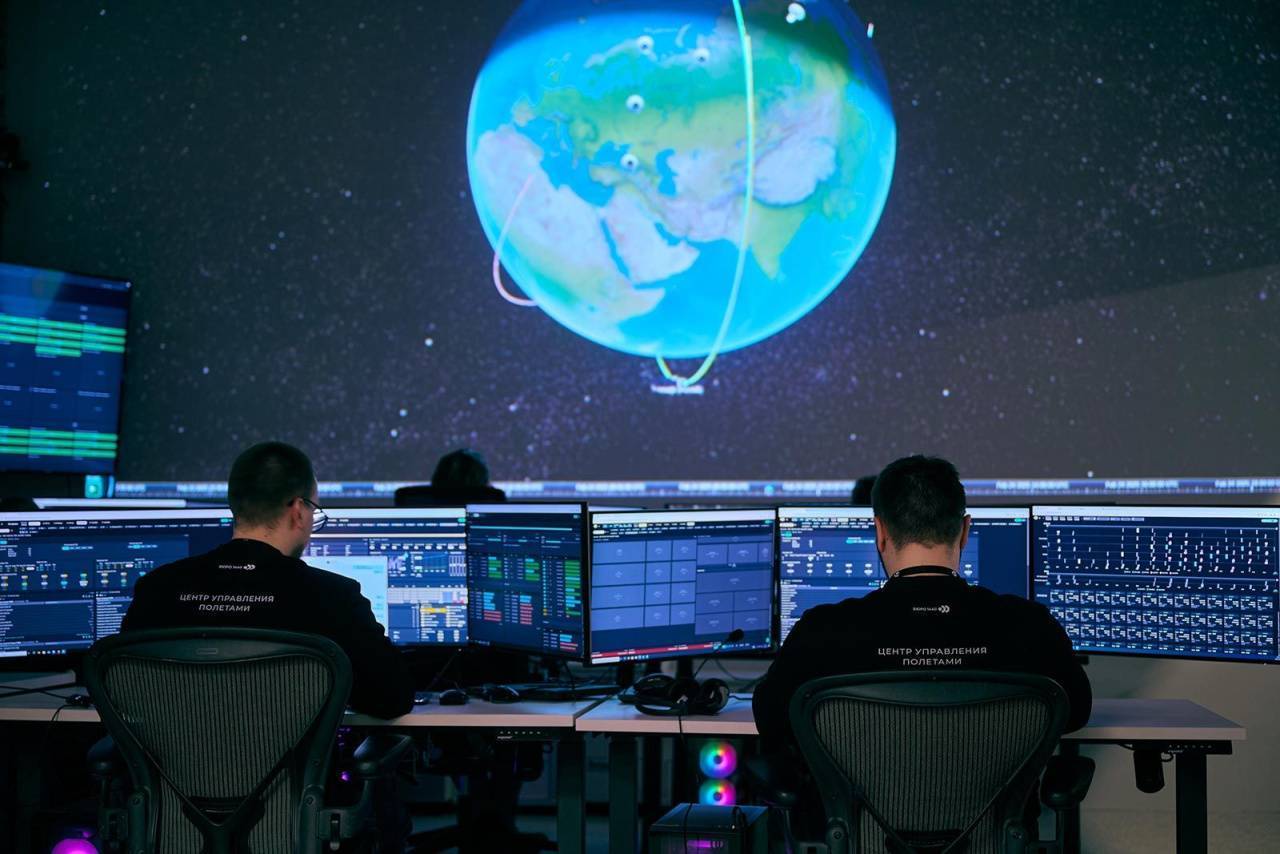
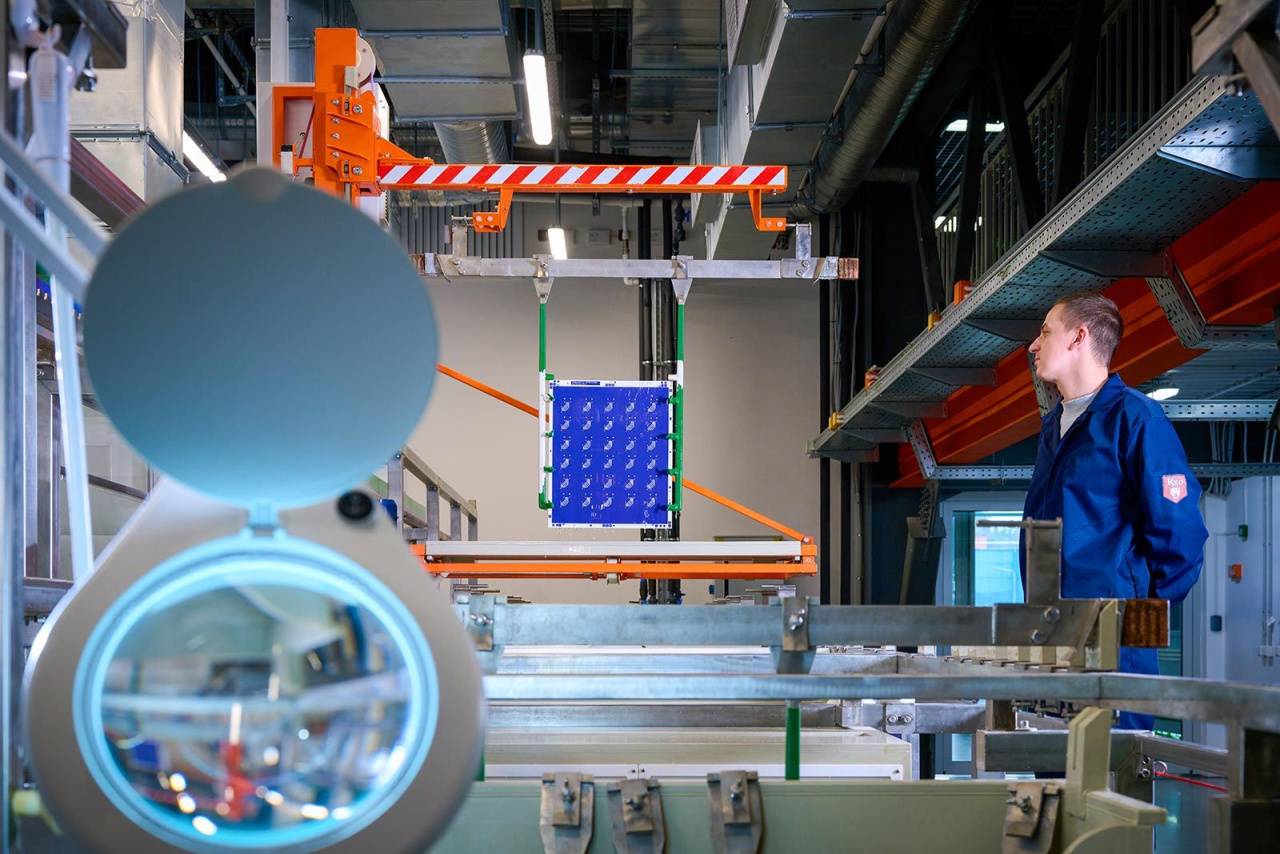
The Russian aerospace company Bureau 1440 has launched mass production of solar panels at the Pechatniki site of the Technopolis Moscow special economic zone. It is a full cycle, from the photolayer to the deployment systems in space. The total output capacity is 750 kilowatts per year. This is enough to create a satellite constellation of a dozen vehicles. In addition, this company is a developer and operator of a satellite communications service based on its own low—orbit constellation.
Sergei Sobyanin spoke about the space projects being implemented in Moscow. Today, there are already 16 Rassvet satellites in orbit, which were launched on March 23, 2026. In total, more than 250 spacecraft will be launched into orbit to ensure global coverage of the 24/7 communications service.
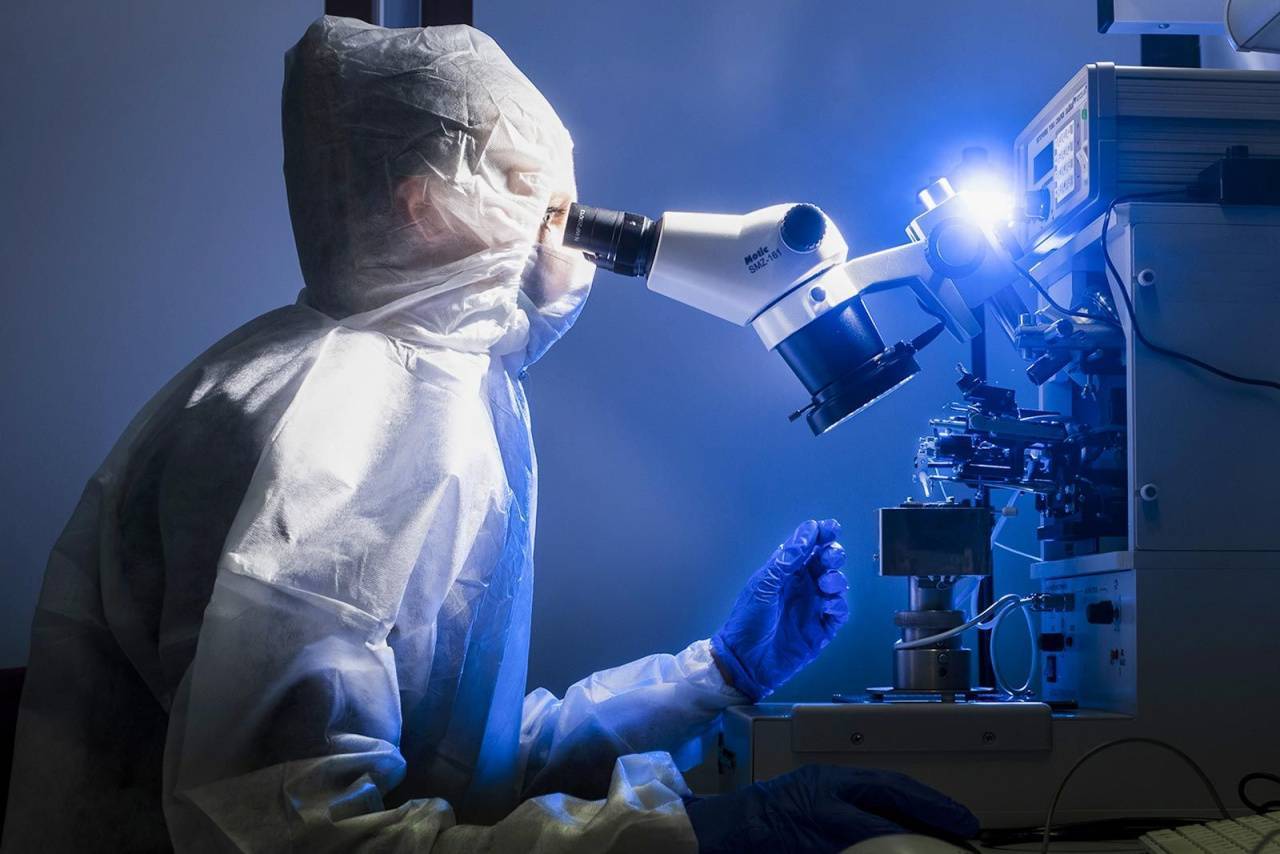
The Proton Plant has created the world's first orbital scanning microscope, the SMM-2000, which has been operating on the Nanoprobe-1 spacecraft for more than two years. The device studies the effects of solar wind and light with nanometer precision. Thanks to him, scientists have established the causes of dust in near-Earth space and discovered the effect of self-healing of certain materials under the influence of light, which is important for creating durable spacecraft skin.
Microscopes produced by the company work not only in space. These devices are available at several nuclear power plants, as well as at the Tokamak T-10 installation at the Kurchatov Institute. Resistant to extreme temperatures, they make it possible to study the behavior of materials inside active zones, contributing to the development of safe nuclear and thermonuclear energy.
"Proton Plant is a resident of the Technopolis Moscow special economic zone. Thanks to the support of the city authorities, the company receives tax benefits and directs the released funds to expand production — for example, with the assistance of the capital, new buildings were opened where high—tech products are manufactured," said Sergei Sobyanin.
The Butis company, a resident of the Technopolis Moscow SEZ, specializes in the development of RF filters. These compact devices clear the signal from interference, skipping only the target frequencies. Filters are critically important for navigation and communication systems in aviation, space and radio electronics. In particular, they are installed in astronauts' headsets: the devices cut off noise from on-board equipment and spacesuits, providing clear communication during spacewalks.
The products are created entirely from domestic components, which guarantees the technological independence of communication systems. A member company of the Moscow Innovation Cluster has attracted a grant for production re—equipment through the i.moscow platform.
The scientific and production enterprise "Micro-Vis" at the Pechatniki site specializes in the development and production of ultra-high frequency (microwave) range electronics. The company produces frequency converters and receiving modules for telecommunication systems, radars and antenna arrays. The devices are used in the onboard equipment of spacecraft and in the ground infrastructure of communication with orbit. For example, they work on the International Space Station.
Electronics are created on the basis of domestic components. Product characteristics make it possible to successfully replace Western counterparts in critical industries.
"As a member of the Moscow Innovation Cluster, the company has received grants in the amount of 16.2 million rubles. The funds were used to purchase high-tech equipment, which made it possible to significantly expand production facilities," said Sergei Sobyanin.
Press Service of Technopolis Moscow SEZ
+7 495 647 08 18 (ext. 1209) pr@technomoscow.ruFollow Technopolis Moscow SEZ on social media, stay updated with the main SEZ news on our Telegram channel, and receive all important updates directly to your inbox via our weekly newsletter.


