
21.11.2025


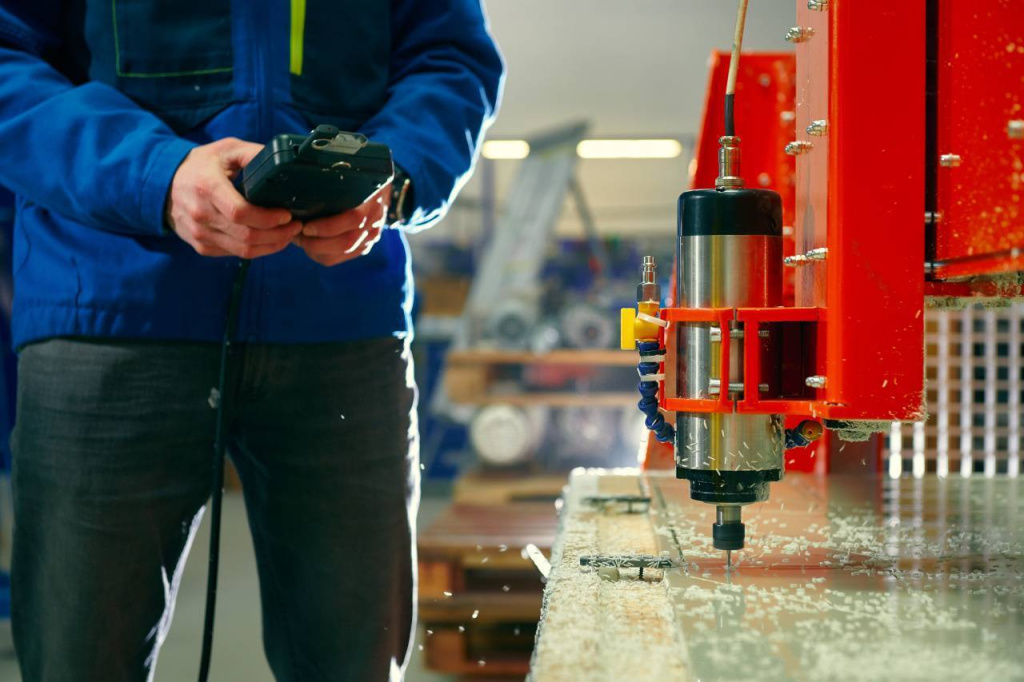
Our city is home to nearly 4,600 large and small manufacturing plants representing over 20 sectors of the real economy – from mechanical engineering to food processing and printing. The capital ranks first in Russia in terms of production volume in microelectronics (radio electronics), electric vehicle manufacturing, aerospace, and medical industries.
The manufacturing industry has become the most important driving force of Moscow's economy, accounting for 13% of the capital's GRP and employing over 755,000 people – one in ten of the city's workers.
Since 2019, manufacturing output has more than tripled. It would be no exaggeration to call modern Moscow the driving force of Russia's technological development.
Today, the Moscow Government is focused on supporting priority high-tech industries, as well as improving the availability and quality of industrial infrastructure – by 2030, it is expected to reach 25 million square meters. Private investment in industrial development will account for approximately 75%.
Why does industry choose Moscow?
First and foremost, because our city offers businesses access to qualified personnel, which is crucial for modern high-tech manufacturing.
The capital offers industry a large market and excellent opportunities for building supply chains from development to mass production of finished products.
And, of course, the support measures offered by the Moscow Government to businesses planning to establish production in our city play a crucial role.
This post describes what has been done and what is planned to further expand industry's presence in Moscow.
In the City Development Strategy to 2030, we have formulated three key objectives.
1. Create the best infrastructure for the development of high-tech industry.
The Technopolis Moscow special economic zone has been and remains a key location for new production facilities.
The total area of the 10 SEZ sites exceeds 390 hectares. The industrial and public-business infrastructure covers 1.8 million square meters.
Over 230 enterprises from various industries operate in the SEZ, 125 of which are resident companies and enjoy tax incentives: a 10-year exemption from property, land, and transport taxes; a reduced corporate income tax rate of 2%; land leases at 2% of the cadastral value; and a free customs zone.
The companies have invested over 267 billion rubles in developing their production facilities and created over 28,000 high-tech jobs.
Technopolis Moscow manufactures laser processing machines, industrial robots, medical equipment, solar panels for the Russian satellite constellation, innovative pharmaceuticals, and much more.
One of the largest sites in the SEZ is the Rudnevo Industrial Park, where over 20 administrative, business, and industrial buildings with a total area of 440,000 square meters have been constructed. Design work is underway on a new complex with a total area of approximately 400,000 square meters, which will house production facilities in the machine tool industry, instrument making, and aircraft manufacturing. Opening is scheduled for 2027.
At another large Technopolis site, Pechatniki, new buildings for high-tech enterprises are being constructed, with a total area of approximately 429,000 square meters.
By 2030, we plan to significantly increase the area of the Technopolis Moscow SEZ to 600 hectares and 5.7 million square meters of production and business infrastructure. More than 90,000 specialists will work at the SEZ enterprises, and approximately 600 high-tech companies will manufacture their products.
As a result, several large high-tech industry clusters will be formed at Technopolis sites.
Moscow is also actively developing technology parks—spaces for innovative production facilities and startups. We open them on the premises of existing scientific and industrial associations or build them from scratch as part of projects to redevelop former industrial zones and other inefficiently used areas.
Currently, 49 technology parks operate in Moscow. They house the production facilities of 2,200 high-tech companies. They employ 75,900 people. Ninety-three percent of residents are small and medium-sized businesses, while large companies account for only 7%. Anchor resident status has been awarded to 24 of the most significant enterprises.
According to the Development Strategy, it is planned to increase investment to 475 billion rubles, commission approximately 2.5 million square meters of laboratory, production, and office space, and double the capacity of technology parks to 5,000 companies and create 150,000 jobs.
Microelectronics and Photonics Cluster
Moscow is the leading center of Russia's electronics industry. The capital is home to 872 companies in the industry.
Moscow factories produce chips, electronic and optical products, innovative communications and control systems, modern measuring and navigation equipment, and much more.
In 2024, the industry grew 2.1 times compared to the previous year. Revenue amounted to 959 billion rubles, accounting for 40% of the Russian total.
In March of this year, construction of the Moscow Photonics Center was completed. Photonic integrated circuits will soon begin to be manufactured there, which will increase data transfer rates by 50-100 times. These products will be in demand in telecommunications, space communications, biomedicine, and artificial intelligence.
Another important project within the cluster is the construction of a photomask center. Moscow's partners in its implementation include the Russian Ministry of Industry and Trade, the Russian Ministry of Education and Science, and the National Research University "Moscow Institute of Electronic Technology." The facility will manufacture photomasks used in the creation of integrated circuits. The center's capacity will allow for the production of up to 5,500 units per year.
The Moscow Government, together with the Element Group of Companies, is also preparing to open the Moscow Microelectronics Testing Laboratory. This is a modern center for testing components and chemical analysis of electronic materials, equipped with cutting-edge equipment and highly qualified specialists.
Pharmaceutical Cluster
Russia's largest pharmaceutical cluster is being formed at the Alabushevo and Pechatniki sites.
Today, it includes 14 companies that have created over 3,000 high-paying jobs.
The companies produce medications for the treatment of oncological, cardiac, autoimmune, and other diseases. Cluster residents have already invested over 55 billion rubles in the development of their production facilities. Plans include attracting an additional 47.3 billion rubles by 2030.
In the next few years, the total area of the pharmaceutical cluster's facilities will grow to 300,000 square meters. Once production reaches its design capacity, it will employ approximately 4,400 people.
Electric Vehicle Cluster
We are paying particular attention to the development of the electric vehicle cluster.
Moskvich is one of the leading companies in the automotive and electric vehicle industry.
The Moskvich 3e electric vehicle, equipped with an electric motor with a peak power of 193 hp and a 65.7 kWh battery, provides a range of up to 410 km. Both slow and fast charging options are available.
The level of localization of production at the company is constantly increasing – it has mastered the production of glass, batteries, tires, wheels, seats, springs, anti-lock braking system units, and other components. Several dozen more models are planned to enter serial production by the end of the year.
Atom recently opened its own research and development center, employing over 60 engineers.
Atom is a promising project that has developed its own technological platform. In June 2025, the main equipment of the production lines was completed. All key areas, including welding, painting, and assembly, are ready. Serial production of the vehicles is planned to begin soon. The electric vehicle will be available in four models: for private individuals, taxis, car-sharing, and the public sector.
The capital is also a leader in the development of charging infrastructure. Parus Electro, an anchor resident of the Svyaz Engineering technology park and a member of the Moscow Electric Vehicle Cluster, created within the Technopolis Moscow SEZ, has developed a specially designed charging station. The station provides fast charging for electric vehicles and fits perfectly with the capital's modern design code. Another company, Rewatt, has completed development of a distributed charging hub system, a high-tech modular solution for mass vehicle charging with virtually no restrictions—the number of connection points depends solely on the available electrical power.
If necessary, the system can be equipped with a pantograph for charging electric buses.
Elevator and Vertical Transport Cluster
An elevator and vertical transport cluster is being formed at the Karacharovsky Mechanical Plant in Moscow on Ryazansky Prospekt (another Technopolis Moscow site).
Modern elevators are already manufactured here, and the production of moving walkways, escalators, related equipment, and lifting device components (control systems, frequency converters, cabin door drives, TFT screens, and others) will be launched.
In December 2024, the Moscow Government signed offset contracts for the supply of elevator equipment for the implementation of capital repairs and renovation programs for the first time in Russia.
Over the next 10 years, the Karacharovsky Mechanical Plant will supply the city with at least 22,700 elevators. To achieve this, the plant will conduct a large-scale modernization, construct new production buildings, and organize serial production of next-generation passenger elevators. Investments in development will exceed 2.1 billion rubles.
Battery Production Cluster
The battery is a key component of electric transport. In-house production of this product is the most important, if not the only, condition for technological sovereignty in this industry.
A new battery production cluster is being created in the Technopolis Moscow special economic zone (Krasnaya Pakhra site). Two factories are being built: one will produce high-power traction batteries, the other will produce low-power batteries. They will be used in electric transport, municipal vehicles, drones, and personal mobility vehicles.
As a result, the capital will see the emergence of modern production, new jobs, and opportunities for young professionals. In 2023, the city signed a contract for the supply of over 155,000 traction batteries for electric buses, Moskvich cars, and river electric vessels.
Industrial Clusters in the New Moscow Administrative District
Monarch recently completed construction of a unique robotic factory for large-scale modular housing construction at the Tolstopaltsevo site.
Large modules—up to 100 square meters—are fully equipped with utility systems, equipment, façade systems, doors, windows, and even interior finishing, and are prefabricated in a factory. All that remains is assembly on site.
As a result, construction time for kindergartens and schools is reduced by approximately half, and for residential buildings, by 30%.
Two more large industrial clusters—a construction cluster and a food cluster—will be created in the Krasnopakhorsky District of New Moscow.
The construction cluster will occupy an area of approximately 200 hectares. Currently, more than 400,000 square meters of industrial space are planned for construction. The total potential of this site is approximately 990,000 square meters. The project will employ approximately 14,000 people. Reinforced concrete and building structures, modular buildings, metal products, wooden flooring, and other products will be manufactured here.
The food cluster will occupy an area of over 125 hectares, with a total construction area of over 800,000 square meters. The project's implementation will create at least 13,000 jobs.
By 2030, the cluster will include meat and dairy production facilities, bakery and confectionery products, and ready-to-eat meals.
In the future, glass and eco-industrial clusters are planned for New Moscow.
Press Service of Technopolis Moscow SEZ
+7 495 647 08 18 (ext. 1209) pr@technomoscow.ruFollow Technopolis Moscow SEZ on social media, stay updated with the main SEZ news on our Telegram channel, and receive all important updates directly to your inbox via our weekly newsletter.


