
06.10.2025


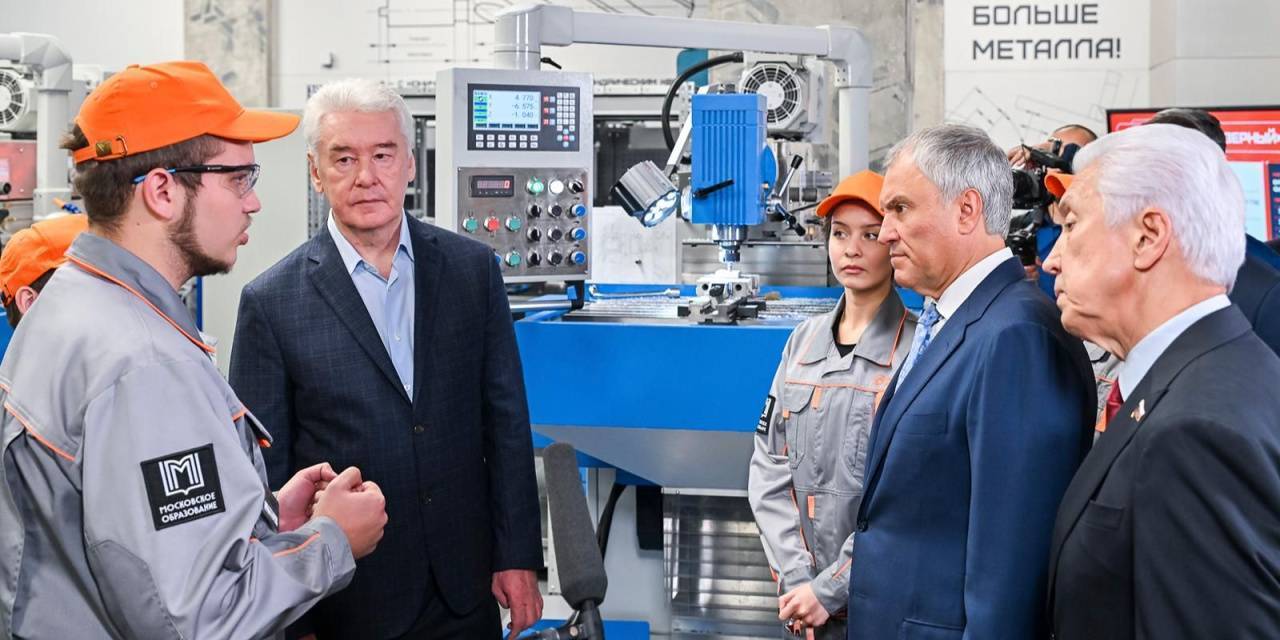
A new training hub has opened in Moscow, offering adults the opportunity to master modern professions, acquire in-demand skills or upgrade their qualifications in as little as three months, while college students can undergo practical training. Moscow Mayor Sergei Sobyanin and Chairman of the State Duma Vyacheslav Volodin visited the “Professions of the Future” center located on the Pechatniki site of the Technopolis Moscow Special Economic Zone (42 Volgogradsky Prospekt, Building 8). The visit was timed to coincide with the Day of Secondary Vocational Education, observed annually in Russia on October 2.
The new “Professions of the Future” center at the Pechatniki site of the Technopolis Moscow SEZ is a unique facility designed to address key challenges of the labor market and set a new Moscow standard for continuous professional education in the 21st century. Its mission is based on mastering relevant skills, learning on equipment identical to that used in real production facilities, and training with experienced industry practitioners.
“Today, skilled trades are a critically important foundation of the country’s economy and technological progress. The development of secondary vocational education and the rapid training of specialists are among the city’s priority objectives,” Sergei Sobyanin wrote on his MAX messenger account.
35 workshops for training specialists, the high-tech infrastructure of the Future Professions practical training center is unparalleled in Russia — over five thousand units of equipment and machinery are spread across four floors covering more than nine thousand square meters. Training is offered in 75 in-demand professions. Essentially, the economy of a modern city is simulated here—35 workshop shops cover key industries and allow specialists to be prepared to start their duties immediately after graduation. All educational programs are practice-oriented, developed with the participation of leading employers in Moscow, and are taught by highly qualified industrial training masters with ten years of experience in real economic sectors. "The system itself is designed so that a person acquires several related specialties. Not only the technologies of mechanical engineering, but also the ability to work with machines—as an operator, machinist, turner, miller, and so on. A person should have multiple specialties so that, upon entering the workshop, they can work on any equipment," noted Sergey Sobyanin during his visit to the center. According to Vyacheslav Volodin, the experiment with a special procedure for final certification of ninth-grade students, in which Moscow also participated, has proven to be effective.
He emphasized that a body of practical experience has been developed, which needs to be thoroughly studied and, in the future, allow other regions to join the pilot project, as there is demand for it. “Many regions are now expressing interest in participating in the pilot. I hope that the Government, since deputies previously initiated amendments, will submit the necessary legislative initiatives,” he said.
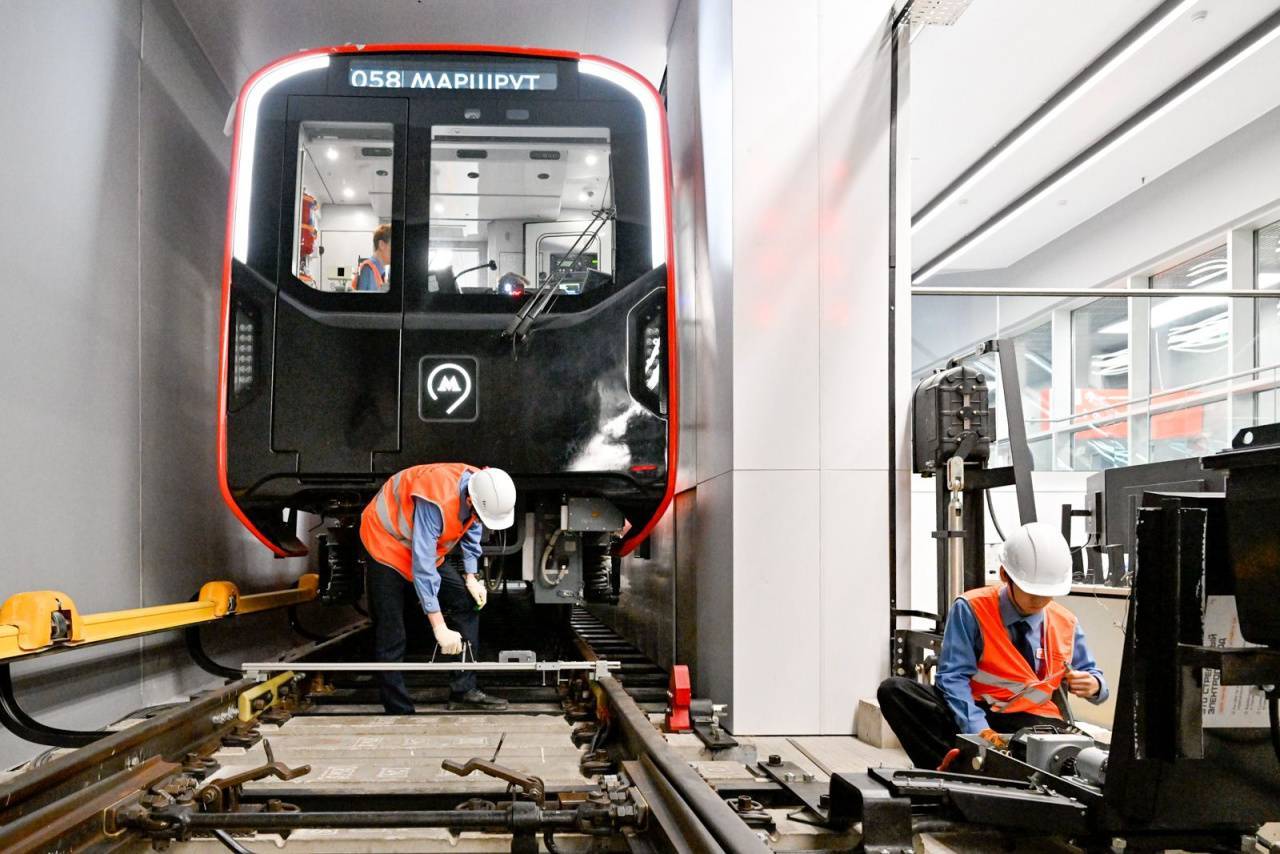
The Moscow transport sector is represented in the workshops (966 square meters), where the Pechatniki metro station has been recreated with an actual “Moscow-2024” subway car. All types of above-ground and underground urban transport are showcased there, including training simulators for subway trains, electric buses, and trams, a dynamic escalator model, a traction substation, a dispatcher circle, and communication systems. Specialists for all transport services are trained here — from train operators and dispatchers to station staff and electric bus drivers. The comprehensive training not only teaches specific professions but also develops coordinated teamwork skills, including responses to emergencies and complex situations.
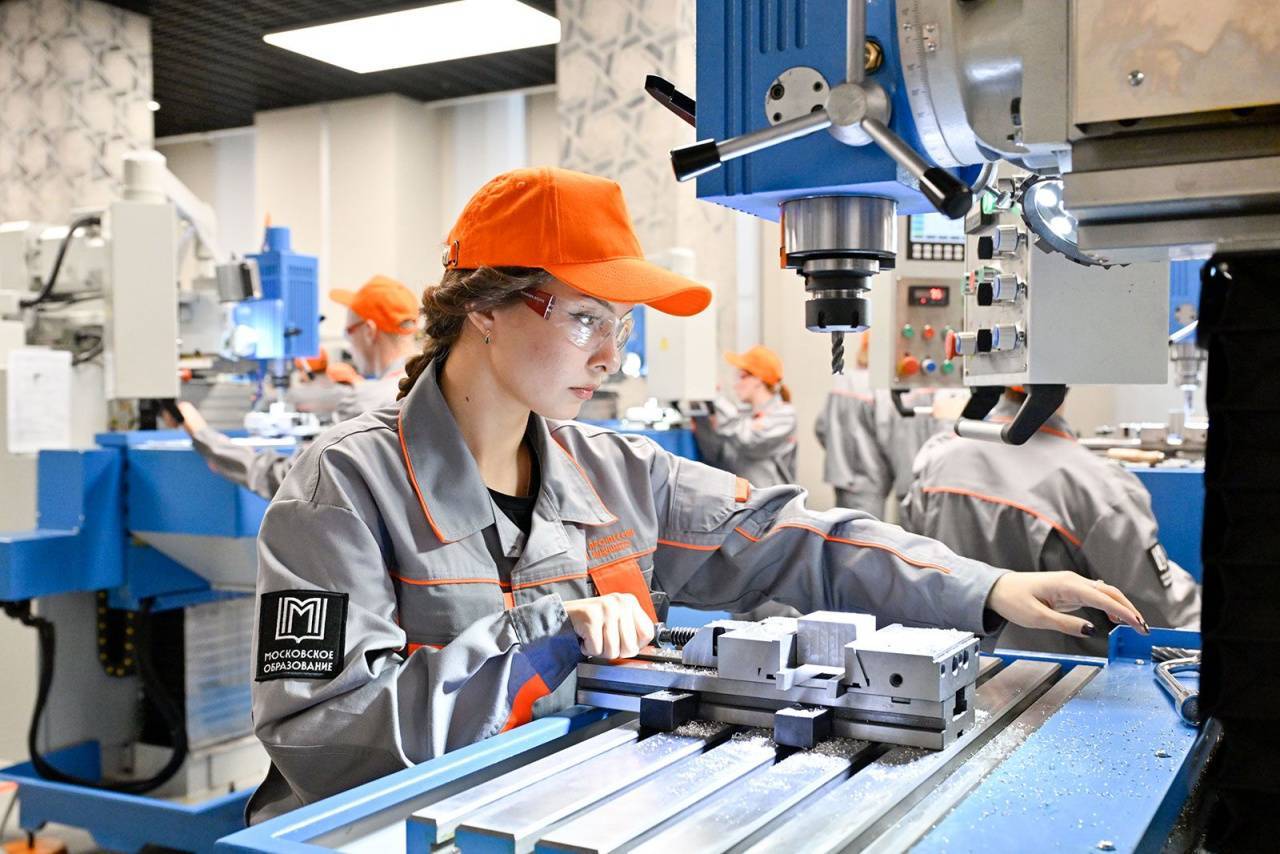
In the milling workshop (264 square meters), industrial milling and grinding machines, a mixing and dosing line, a hydraulic press, and a guillotine have been installed. The equipment allows students to immerse themselves in real workflow and practice skills — from creating technical drawings to polishing finished parts. In the turning workshop (165 square meters), students work with metal, refining operations from drawing to finished parts, whether basic elements or complex assemblies.
The elevator operation workshop (143 square meters) features a three-level shaft with functioning passenger and freight elevators from Moslift JSC and the Karacharovsky Plant, as well as two different types of lifts for people with reduced mobility.
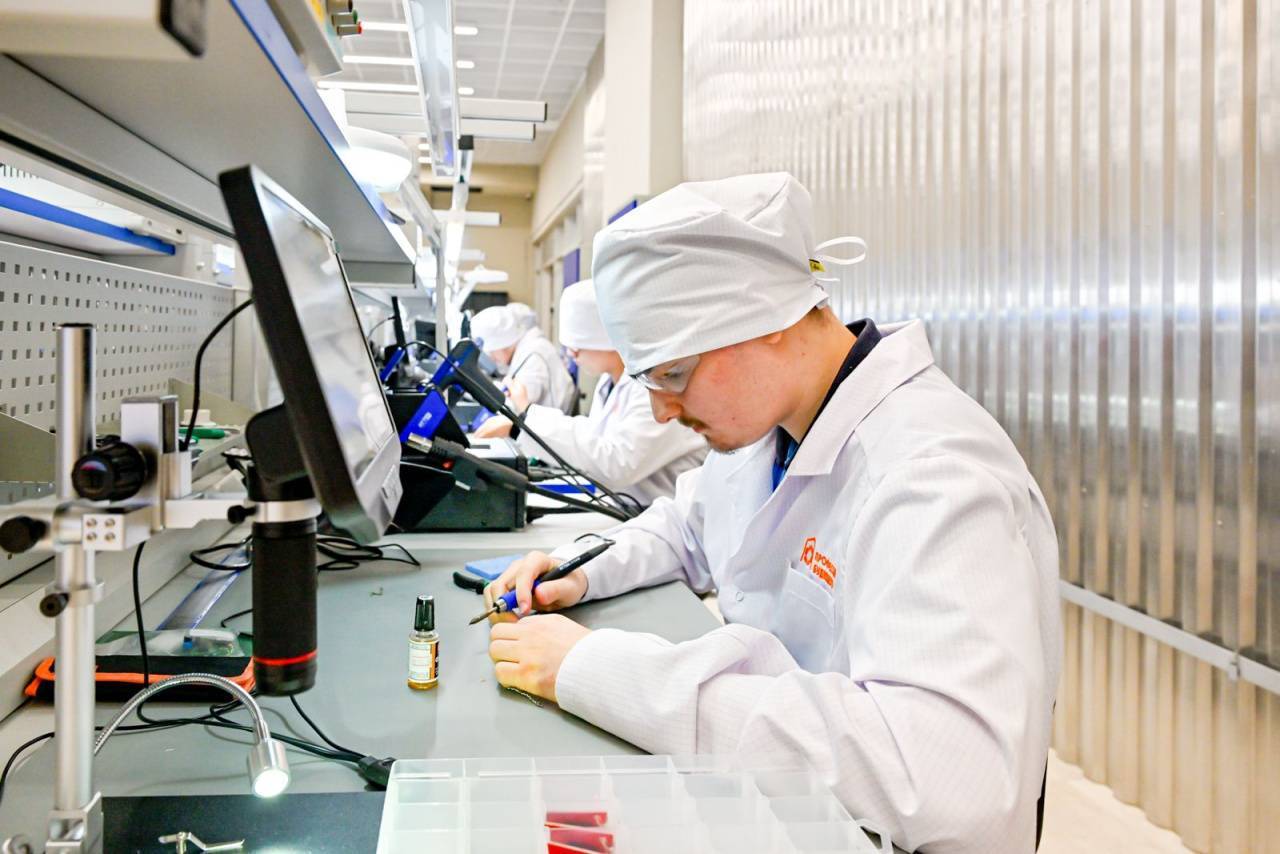
The electronics assembly workshop (281 square meters) allows students to study the full cycle of electronics production — from printing circuit boards on an automatic printer to mounting SMD components and soldering. The layout of the equipment within the workshop corresponds to real production processes in the electronics industry. Automated ovens, board loaders, and adjustable tables enable students to go through all key stages of work — from assembly to device testing.
In the conveyor production workshop (262 square meters), a modern standard production line has been recreated. The finished products are then used in other training workshops, and students will be able to work on any other conveyor lines. The organization of work areas meets food production standards — from shaping products to automated packaging.
The electrical installation workshop (425 square meters) allows students to practice the full cycle of electrical installation work — from designing wiring layouts to programming relays, diagnosing control circuits, and calibrating protection systems.
In the “Stars” restaurant workshop (318 square meters), which features a professionally equipped kitchen with induction stoves and combi ovens, a stylish bar, and a guest area, students are trained not as individual specialists but as a complete team according to the best industry standards.
The waiter will greet guests and take their orders. The chef will prepare the dishes, and the barista will serve aromatic coffee. In the “Bread” bakery (155 square meters), there are two workshops — one for baking and one for dough rolling. They are equipped with industrial machinery for the full production cycle — from kneading and rolling the dough to baking in convection ovens and shock freezing.
The Grand Hotel “Moskvich” (161 square meters) is a five-star hotel space with a reception area and three rooms of different types. Here, students can learn standards of cleaning, service, and room preparation at the level of the best international hotel chains, immersing themselves in the realities of the hospitality industry — from guest interaction to room preparation.
The “Building Maintenance” workshop (184 square meters) trains students in three professions — installers, ventilation system mechanics, and building maintenance specialists. The organization of workspaces meets industrial standards — from installation to adjustment and testing of ventilation systems.
The “Plumbing” workshop (361 square meters) features work areas for assembling, soldering, and testing plumbing systems, professional tools, and stands with pipes of various diameters. The equipment allows students to study the full cycle of work — from designing layouts to installing pipelines and devices, as well as learning to diagnose leaks, clear blockages, regulate pump pressures, and adjust boilers.
In the sewing workshop (184 square meters), students learn to work with machines and textiles — from basic operations to assembling finished products. They also learn to select fittings, check cuts, fix defects, feel the material, and work with it confidently.
The design workshop (70.5 square meters) trains graphic and web designers. It is equipped to modern design studio standards for teaching the full workflow — from creating digital layouts on computers to bringing ideas to life.
The new center brings together the interests of all participants in the labor market. For adult job seekers, training at the “Technopolis Moscow” site in Pechatniki provides employment through a network of partners and a potential income increase of 30 percent. College students gain an advantage at the start of their careers by working on employers’ equipment. Employers benefit from the rapid training of existing personnel and the opportunity to receive fully qualified specialists with practical skills that meet the demands of the market.
“After completing the training, specialists are ready to work from day one. Career mentors from the Moscow Employment Service will provide support and guidance in future employment. The center’s partners include over 3,000 employers. Its database contains more than 500,000 current job vacancies,” wrote Sergey Sobyanin on his MAX messenger account.
The center’s partners include the “Technopolis Moscow” SEZ and its residents, such as a manufacturer of lithium-ion batteries for electric transport (LLC “Renera,” part of the Rosatom group), a leader in integrated circuit production (JSC “Micron”), and a developer and manufacturer of semiconductor products (JSC “Angstrem”), as well as major employers from various sectors, including transportation and logistics (State Unitary Enterprise “Moscow Metro”), industry and mechanical engineering (PJSC “Karacharovsky Mechanical Plant,” JSC “Moscow Machine-Building Plant ‘Avangard’,” JSC “MEL,” Rosatom Group, JSC “Scientific and Production Center for Automation and Instrumentation named after Academician N.A. Pilyugin,” LLC “Moskvich”), housing and utilities, urban infrastructure and construction (JSC “Moslift,” Moscow Housing Capital Repair Fund, PJSC “MOEK,” PJSC “Mosenergo,” LLC “Specialized Developer PSF ‘KROST’”), the restaurant and catering industry (JSC “United Confectioners,” PJSC “Cherkizovo Group,” PJSC “Rosinter Restaurants Holding,” the “Kofemania” and “Shokoladnitsa” chains), and the hotel business (Ararat Park Hyatt Moscow, LLC “Soluxe,” service company “Multimaster”).
“We have the same equipment as most of our partner enterprises, so future applicants, when they come to the workshop, won’t have to worry too much about how to adapt to production. They immediately see that the machines are very similar, and they can step in and start working,” said Valery Fadeyev, a master of industrial training at the Employment Center of the ANO “Future Professions.”
In September 2025, the new “Future Professions” center began training its first groups of adults and college students. It is expected that 15,000 qualified specialists will graduate from the center annually.
The development of Moscow’s system of secondary vocational education
Currently, there are 177 colleges in the capital, including 71 private, 44 federal, and 62 under the jurisdiction of the Moscow Government. More than 300,000 students are enrolled in these colleges, including over 140,000 in city colleges. The number of students in city colleges by sector is as follows: IT — 22.9 thousand, industry — 19 thousand, creative industries — 17.7 thousand, transport — 14.9 thousand, healthcare — 14.7 thousand, construction — 14 thousand, hospitality — 13.2 thousand, education and social services — 10.7 thousand, security and law — 7.8 thousand, finance and trade — 5.2 thousand, culture and arts — 1.4 thousand, sports — 0.6 thousand.
The employment rate of graduates from city colleges is 95 percent. This year, over 50,000 applicants enrolled in city colleges, including a record number of ninth-grade graduates from Moscow schools — 37,000, which is 40 percent more than last year.
“We made it so that all students wishing to enroll in a Moscow college could do so for free. That is very important, but an even more important story is what we teach them, what the structure of the education is, and what the educational goals are. This is, of course, a complete update of the educational programs, so they are based on employer requirements and oriented toward them,” emphasized Sergey Sobyanin. “Over these years, we have updated 1,500 workshops and laboratories with modern equipment.”
“They have been renovated, made attractive, and by 2027, 100 percent—two thousand laboratories—will be updated.” According to the Mayor of Moscow, the program is actively developing, and by next year, 1,700 laboratories will be ready. In addition, the capital has launched a program to construct seven major flagship educational complexes with a total area of 400,000 square meters.
“We now have educational standards demonstrated by Moscow. It is necessary for each region, taking into account its specifics, to propose approaches and follow the standards that have been developed. We need to compare not the resources—they certainly matter—but the solutions,” noted Vyacheslav Volodin. The Chairman of the State Duma of Russia emphasized that without improving the qualifications of professional workers and ensuring their high-quality training, “we cannot increase labor productivity, which directly affects economic development.”
As part of the modernization of Moscow’s secondary vocational education system, a large-scale transformation of both infrastructure and the content of education is underway, which includes:
Constant interaction with employers and work according to their demands. For this purpose, a broad pool of partners is being formed, including the State Corporation “Rostec,” the Rosatom Group of Companies, the Moscow Metro (GUP), Sheremetyevo Security JSC, Mikron JSC, Moscow Machine-Building Plant “Avangard” JSC, Karacharovsky Mechanical Plant PJSC, MOEK PJSC, Concern VKO “Almaz-Antey” JSC, Glavstroy LLC, Moscow City Telephone Network PJSC, Rostelecom PJSC, Mosgortrans GUP, Sberbank PJSC, Gazprom PJSC, the Russian Automobile Dealers Association, Inzhenerstroy LLC, Specgrad LLC, Moscow Automobile Plant “Moskvich” JSC, NPP “Toriy” JSC, the United Confectioners Holding, Angstrom JSC, Cafemania chains, Novikov Group, Rappoport Restaurants, Myaso & Ryba, Maison Dellos, Rosinter Restaurants Holding OJSC, restaurant groups WhiteRabbit Family, Alba Group, Vasilchuki Restaurant Group, Soluxe hotel chains, Lotte, Four Seasons, The Ritz-Carlton, Hurma Group, Ararat Park Hyatt, Ararat Petrovsky Park, Mariott Imperial Plaza, Savoy Boutique Hotel, Azimut Hotels chain (including Metropol), Cosmos Hotel Group, international hotel company Radisson Hotel Group, Accor Group, industrial-financial group Safmar (including Hotel National), and other companies.
In total, the list includes more than 3,800 employers. They also participate in the development of content and assessment criteria for the graduation demonstration exam and are part of the examination commission.
Updating educational programs. Their new content is being formed based on a competency profile developed jointly with the professional community and industry leaders. In city colleges, education is provided in 150 specialties. By September 1, 2025, more than 85 percent of the programs had been updated. By 2027, 100 percent of educational programs will be brought up to the new standard. In addition, a system has been created for the continuous transformation of programs to accommodate new technologies, advanced industry knowledge, and changing labor market needs. The main goal is to prepare students who are ready to start full-fledged work immediately after graduating from college. At the same time, the duration of training is reduced by increasing the intensity of the programs.
Starting from September 2025, 95 percent of educational programs in Moscow’s secondary vocational education system are designed for one year and 10 months for students who have completed grade 11, and two years and 10 months for recent ninth-grade graduates.
Multidisciplinarity and higher qualification levels. Students have the opportunity to master not one but two or even four professions during their studies. This increases the competitiveness of young specialists in the labor market. For example, in the specialty “Mechanical Engineering Technology,” a graduate receives the primary qualification of “technician-technologist” and also gains the ability to work in three additional professions—broad-profile machine operator, CNC machine and manipulator adjuster, and machine and metalwork inspector. The city sets a mandatory standard of quality training for each profession. The minimum qualification level is the third grade, and for some specialties, the fourth grade. Previously, college graduates could attain no higher than the second grade. They were not allowed to work on complex production tasks, and additional training was required. As a result, this led to a relatively low wage level for young specialists.
Digitalization of education using the “MESH College” services.
Improving the Material and Technical Base of Secondary Vocational Education. In addition to modernizing 1,500 laboratories and workshops, a practical training site for Moscow colleges has been opened in the Rudnevo Industrial Park. Besides the new “Professions of the Future” center at the Pечатники site, in 2025 another practical training center for mechanical engineering will open in the Technopolis Moscow SEZ, where 1,500 college students will be trained annually. “Our primary task is, first, after ninth grade, to professionally guide students, talk to each of them, introduce them to our specialized career guidance centers at enterprises, so that young people understand where they should go. This first task requires no budget resources, just attention and organization. Second, we need to integrate these students—or rather, our colleges—with enterprises in a meaningful way. We must use the full potential of enterprises that, if they want qualified personnel, should invest in this,” added the Mayor of Moscow.
Seven innovative educational campuses are being planned with a total area of about 400,000 square meters to accommodate more than 60,000 students. Among them are colleges in the fields of creative industries, information technology, healthcare, hospitality, industry, transport, construction, and others. The buildings are being constructed using modern educational technologies and based on best global practices. They will provide ergonomic spaces with a comfortable learning environment and full immersion into the profession. New campuses will host professional workshops, as well as internal and external full-cycle production sites for students to practice complex skills under conditions close to real-life scenarios. There will also be coworking and adaptable spaces for group and project work.
Additionally, a major renovation is underway at the Moscow Technological College named after I.A. Likhachev and the Moscow College of Management, Hospitality, and IT “Tsaritsyno”—three buildings totaling 50,000 square meters. By 2031, the infrastructure of all city colleges is planned to be fully updated.
Expansion of the Career Guidance Program for Schoolchildren. In the 2024/2025 academic year, over 70,000 schoolchildren participated in the comprehensive career guidance program. At the same time, 75 percent of ninth-grade students from Moscow schools who entered colleges this year underwent comprehensive career guidance. It is expected that in the 2025/2026 academic year, over 75,000 schoolchildren will participate. The program is constantly updated and expanded, introducing new, including interactive, formats that include motivational and career guidance activities for teenagers and their parents.
Increasing the Prestige of Secondary Vocational Education. The Moscow government has established grants for city colleges to reward high student achievement. A total of 20 grants are awarded: three first-degree grants of 40 million rubles each, seven second-degree grants of 25 million rubles, and ten third-degree grants of 15 million rubles each. These funds can be used for additional financial incentives for teachers and vocational training masters who achieve high results in their work. This serves as an additional stimulus to improve the quality of secondary vocational education in Moscow.
About the Technopolis Moscow SEZ in Pечатники.
“Pechatniki” is a dynamically developing site of the Technopolis Moscow SEZ, hosting production facilities in microelectronics, biopharmaceuticals, and other industries. The total area of the commissioned facilities is 550,000 square meters of industrial and office-laboratory real estate. It houses 130 high-tech companies that have created 9,000 jobs. The total investment volume has exceeded 80 billion rubles.
Among the key residents and tenants are: LLC Lassard (laser material processing machines), NexTouch (interactive equipment), Mesopharm (innovative injection and aesthetic medicine products), Bureau 1440 (satellite communication components), Motorika (bionic prostheses), LLC Neoros (optical transceivers, multiplexers, and splitters), LLC Technorad (industrial robotic systems), LLC Akrus Biomed (high-tech pharmaceuticals), and LLC Hematech (innovative medical products). About 500,000 square meters of industrial buildings are currently under construction to house manufacturing in mechanical engineering, electric vehicle production, instrumentation, machine tool construction, microelectronics, aerospace, and medical technologies and products.
By 2030, over 600,000 square meters of industrial facilities are planned to be built at the Pechatniki site to accommodate about 65 high-tech enterprises, creating 15,000 new jobs. The total investment volume is expected to exceed 200 billion rubles.
Press Service of Technopolis Moscow SEZ
+7 495 647 08 18 (ext. 1209) pr@technomoscow.ruFollow Technopolis Moscow SEZ on social media, stay updated with the main SEZ news on our Telegram channel, and receive all important updates directly to your inbox via our weekly newsletter.


